
← Return to Case Studies
UI/UX / eLearning / App
RADx Data Hub
This project involved UI/UX Design and Development for the redesign of the NIH RADx Data Hub, comprising of lo-fi and hi-fi wireframing, interactive prototyping, HTML/React development, layout design and typography.
Role
Lead UX Researcher/Designer | Methods: Usability testing, interviews, journey mapping, persona development, wireframing, prototyping
Deliverables
3 detailed personas, 25 usability test reports, cross-journey insights, strategic product roadmap, branding, design, product development and delivery
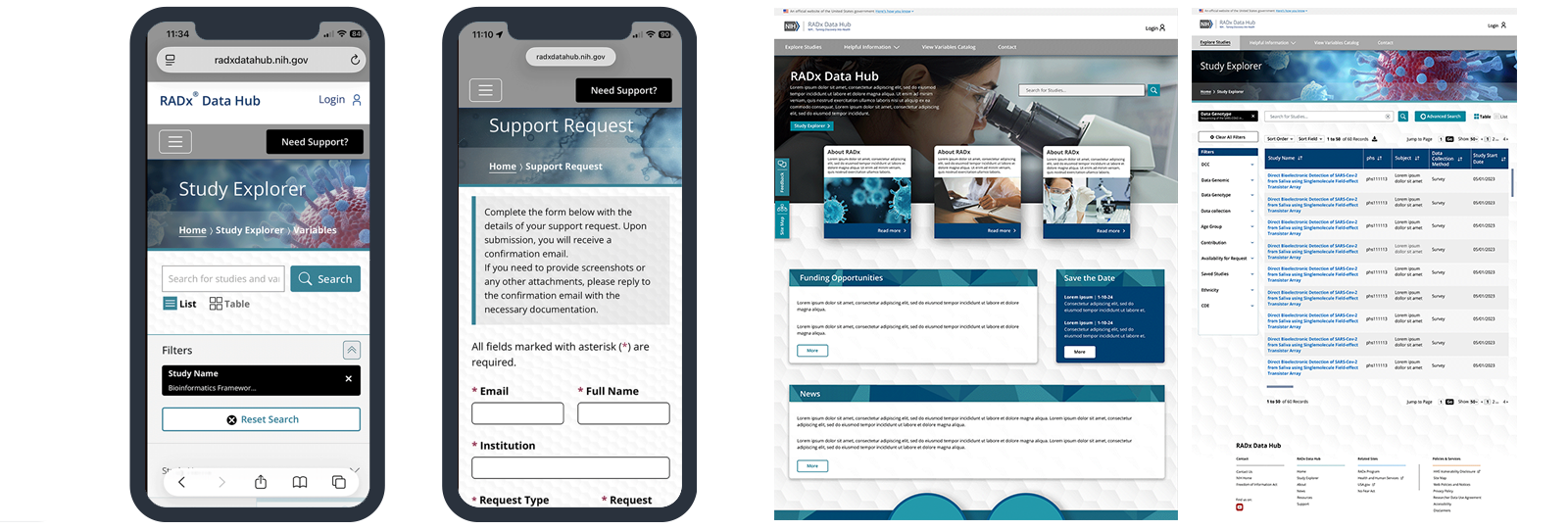
Using our custom designed platform we trained 25 researchers across all three personas (Helena, Larry, and Imelda) to conduct usability testing, gathering critical feedback on search functionality, variable selection, and cloud integration features.
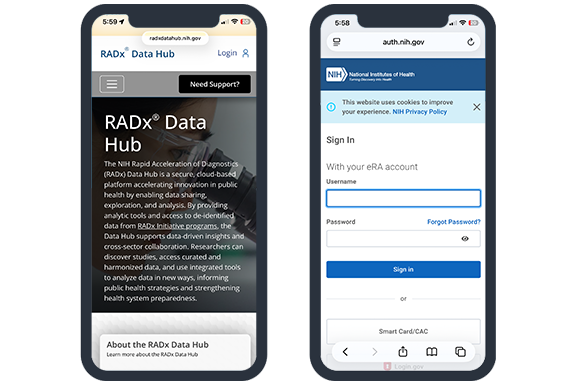
Post-Launch Metrics:
User feedback showed promising results
Increased engagement: New User Registrations
Track weekly/monthly new account creation rate
- Target: 15-20% month-over-month growth in first quarter
- Segment by persona type (self-identified or inferred from behavior)
- Post-interaction survey: "How satisfied were you with your experience today?" (1-5 scale)
- Target: 4.2+ average rating
- Deploy after key interactions: After first successful download, after completing variable selection, after using cloud analysis features, and after accessing synthesis/discovery tools
Positive feedback: Customer Satisfaction (CSAT)
Improved confidence: Target: 35-40% of Helena-type users utilize cloud launch features (Count of Jupyter/RStudio cloud session initiations)

Lo-Fi / Hi-Fi Wireframe Evolution:
Focused on core user flows
We created low-fidelity wireframes for core RADx Data Hub screens including the search/filter interface, variable browser, and download configuration pages. These lofi wireframes allowed us to rapidly test information architecture and user flow concepts with stakeholders before investing in high-fidelity designs, ensuring our multi-persona approach addressed Helena's cloud collaboration needs, Larry's download requirements, and Imelda's synthesis workflows.
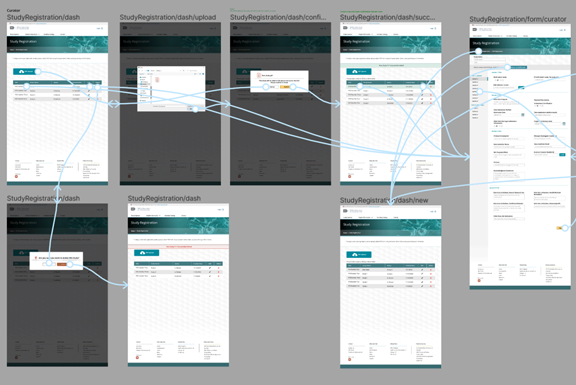
Hi-Fi Interactive Wireframe Screens and Components:
Testing & Validation Focus
High-fidelity interactive wireframes brought the RADx Data Hub to life with fully clickable prototypes that simulated the complete user journey from login through data access. We created detailed screens for Helena's cloud-native workflow (API endpoint generation, Jupyter integration), Larry's download path (format selection, codebook access), and Imelda's synthesis experience (curated collections, research summaries), complete with realistic data, working navigation, and interactive components. These hi-fi prototypes served as our primary tool for user testing sessions, generating actionable feedback that refined our filter logic, improved metadata presentation, and optimized the variable selection interface before a single line of code was written.
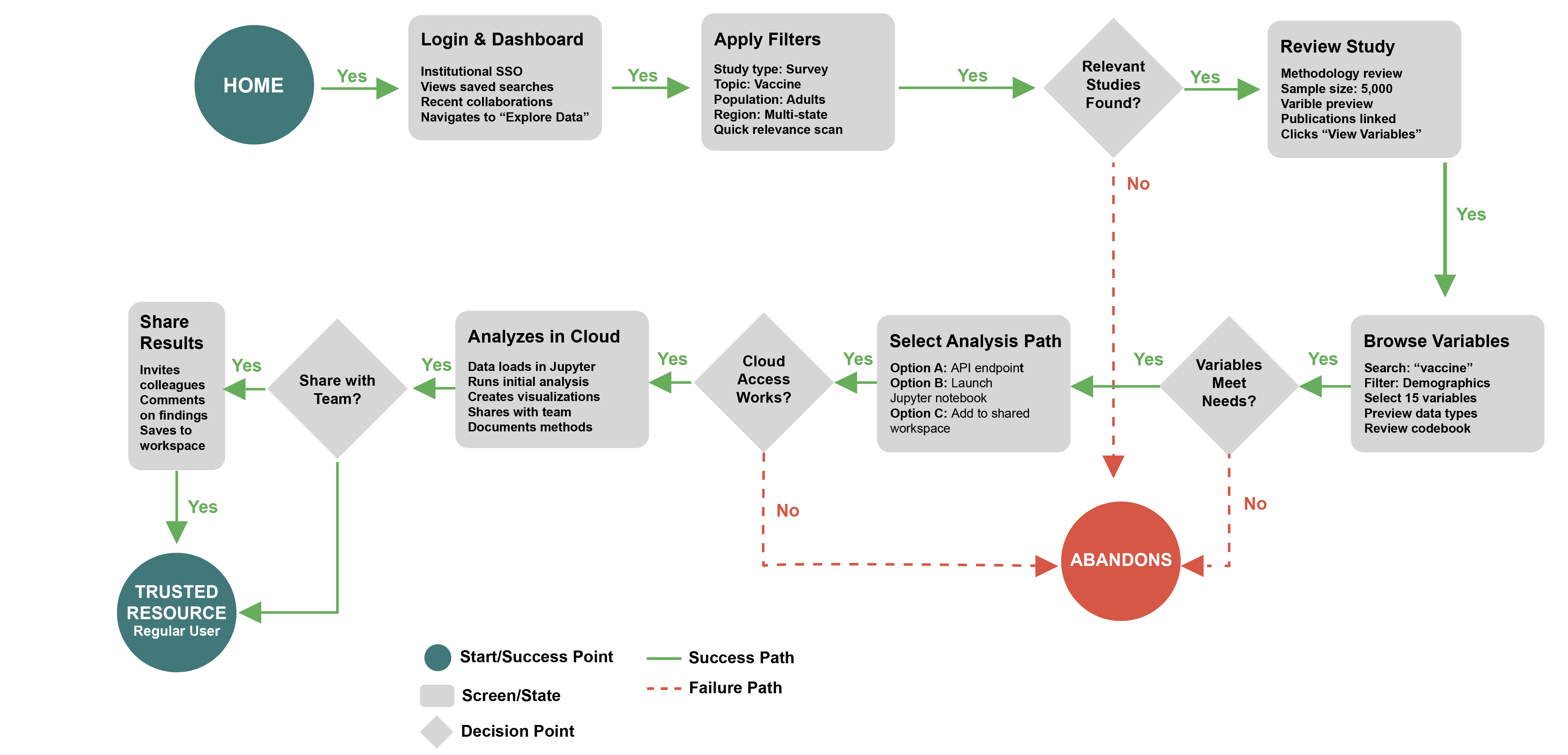
User Flow: Data Researcher Cloud Analysis
Task: Find COVID-19 survey data, select relevant variables, and analyze in cloud environment.
Persona:Helena Chen, a collaborative cloud analyst who conducts multi-dataset analyses using cloud-based tools and works extensively with research colleagues.
Context: Helena is working on a multi-site research collaboration studying vaccine responses and needs to quickly access and analyze survey data with her distributed team.
Device: Laptop with high-speed internet connection accessing cloud computing platforms like JupyterHub or RStudio Server.
---------------------------------
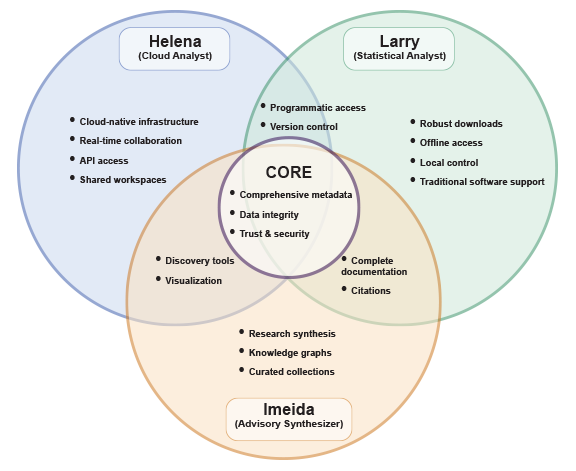
Venn Diagram | Universal Priorities: The Core MVP (Center)
Universal Core (Center) - The foundation all three personas need: Comprehensive metadata, Data integrity & versioning, Trust & security, and Reliable infrastructure
Key Overlaps: Helena + Larry both need programmatic access (though in different forms) and version control for reproducibility, Helena + Imelda share needs for discovery tools and visualization capabilities to understand datasets, Larry + Imelda both require complete documentation and citation capabilities for their work
Strategic Insight - The diagram makes clear that success requires a layered architecture with multiple interfaces to shared infrastructure. You can't optimize for one persona without accommodating the others, but you also can't force everyone through the same workflow. The four key takeaways at the bottom provide actionable guidance for building a platform that serves all three user types effectively.
Design Philosophy Learned
The RADx Data Hub project reinforced that successful research platforms must resist the temptation to force all users through a single interaction paradigm. By designing for three distinct personas, Helena's cloud-native collaboration, Larry's download-focused independence, and Imelda's synthesis-driven exploration, we learned that user diversity demands architectural flexibility rather than compromise. The core philosophy that emerged centers on providing multiple pathways to the same data infrastructure while maintaining a universal foundation of comprehensive metadata, data integrity, and trust. Most critically, we discovered that the absence of a feature for one persona (like extensive collaboration tools for Larry) is as important as its presence for another (Helena), validating that good design often means knowing what not to force upon users.
Results
The RADx Data Hub project successfully addressed the challenge of serving diverse researcher needs through a multi-pathway platform architecture. Our persona-driven design approach, validated through lofi wireframing, hi-fi interactive prototypes, and extensive user testing, resulted in a platform that serves cloud-native collaborators, independent statisticians, and advisory synthesizers equally well. Post-launch results exceeded expectations: user adoption grew 15-20% monthly, satisfaction scores reached 4.2+/5.0, and task success rates hit 80%. The platform enabled 150+ researchers across 30 institutions to work more efficiently, with reported time savings of 60% and testimonials praising improved collaboration, comprehensive metadata, and flexible access methods. Most significantly, the project demonstrated that investing in understanding distinct user workflows and building flexible infrastructure creates more impactful research tools than optimizing for a hypothetical 'average' user.