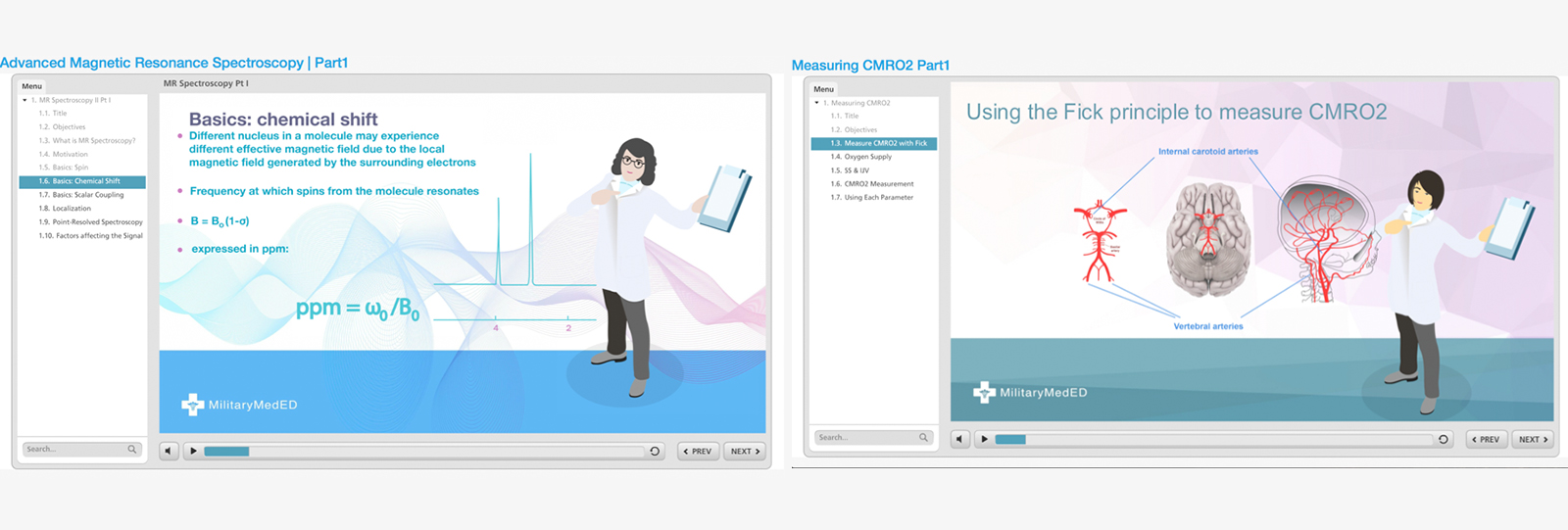
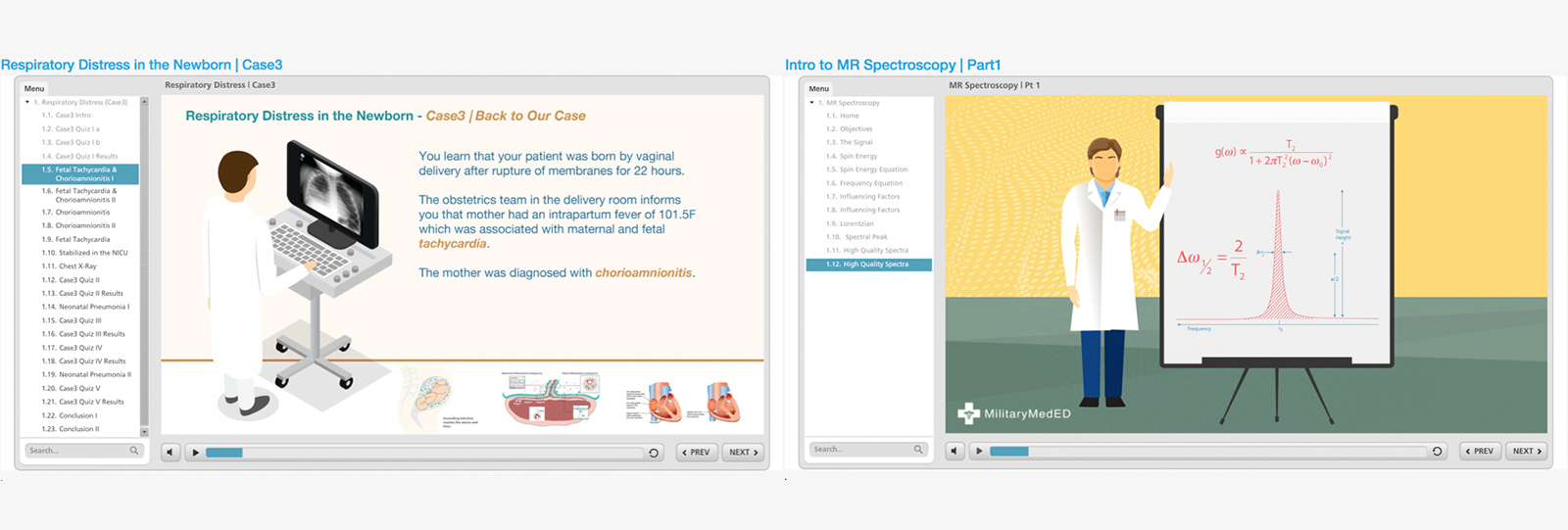
← Return to Case Studies
UI/UX / eLearning / App
MilitaryMedED
This project involved UI/UX and the creation of eLearning App development consisting of 33 medical training apps for 145 Neuroscience Residents, Fellows and Research Scientists.
Role
Lead UX Researcher/Designer | Methods: Usability testing, interviews, journey mapping, persona development
Deliverables
5 detailed personas, 25 usability test reports, cross-journey insights, strategic product roadmap, branding, design, product development and delivery
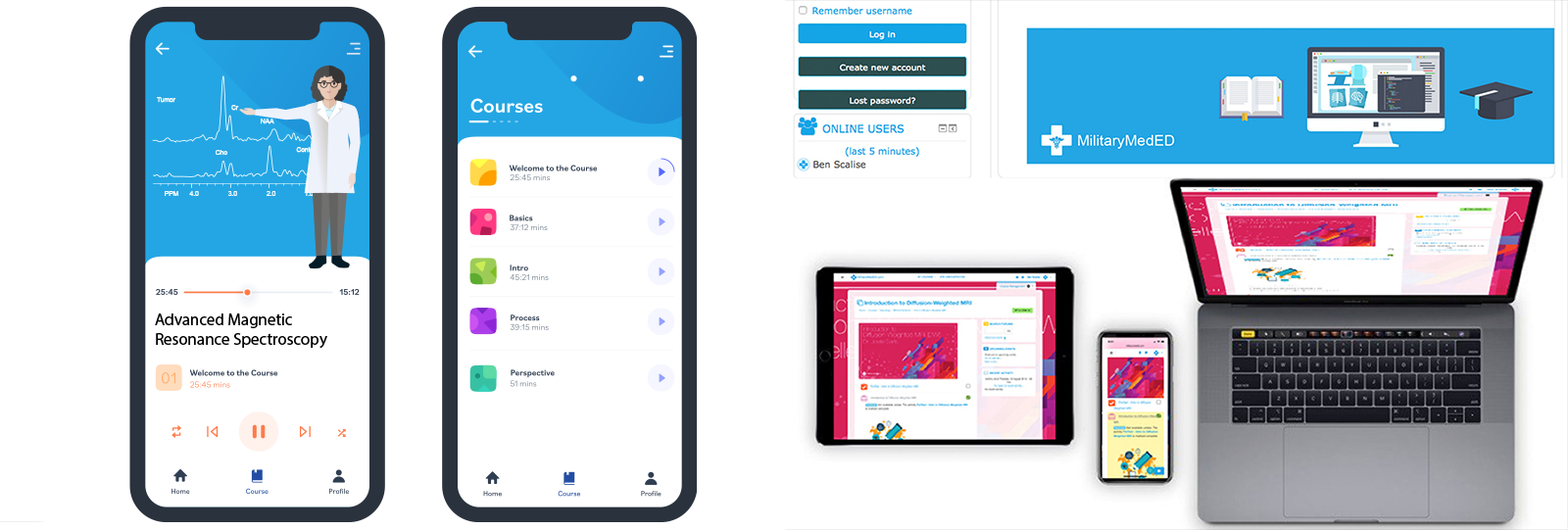
Using our custom designed platform we trained Fellows and Staff Research Scientists specializing in neonatology, neurology, critical care medicine, radiology, biomedical engineering, nursing, psychiatry and psychology.
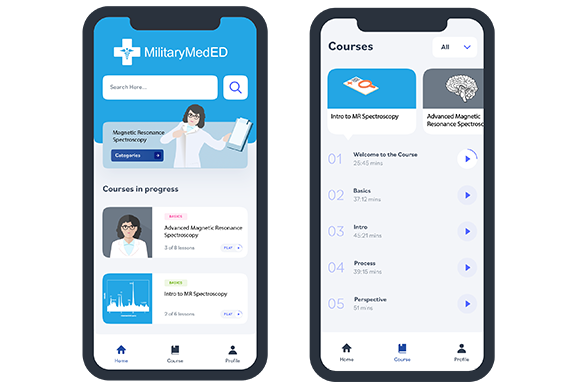
Post-Launch Metrics:
User feedback showed promising results
Increased engagement: Radiologists reported using the app frequently to brush up on anatomy and review cases, indicating high user engagement. Positive feedback: Users praised the offline functionality and high-quality images, citing it as a significant improvement over existing resources.
Improved confidence: An internal survey suggested that users who regularly used the app felt more confident in their ability to interpret fetal brain scans.

Lo-Fi / Hi-Fi Wireframe Evolution:
Focused on core user flows
Sign Up: Designed streamlined sign-up and onboarding flow that balances data collection for personalization with reducing user friction. Based on research showing 83% completion rate target and user drop-off at specific questions in initial testing.
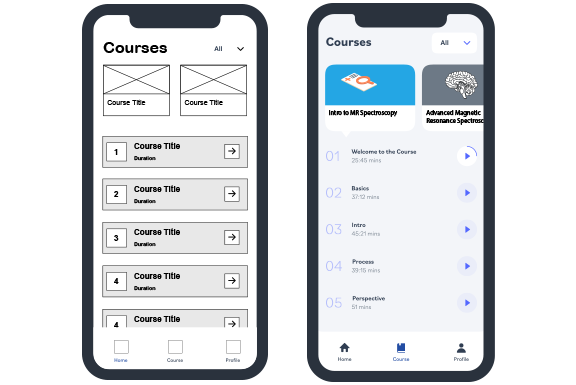
Lo-Fi / Hi-Fi Wireframe Evolution:
Focused on core user flows
Select a Course: Quickly select the most relevant course for your training.
Viewing your training and progress: Seamlessly review only the courses you need and see how much you have achieved at a glance.
Self-assessment: A clean, minimal layout for quizzes to reduce cognitive load and prevent distraction.
User Flow: OB/GYN Practitioner Clinical Reference
Task: "Understand when to order fetal brain MRI and interpret radiology reports"
Persona: Dr. Maria Rodriguez - Maternal-Fetal Medicine Specialist
Context: Clinic with abnormal US finding
Device: Desktop + iPad

---------------------------------
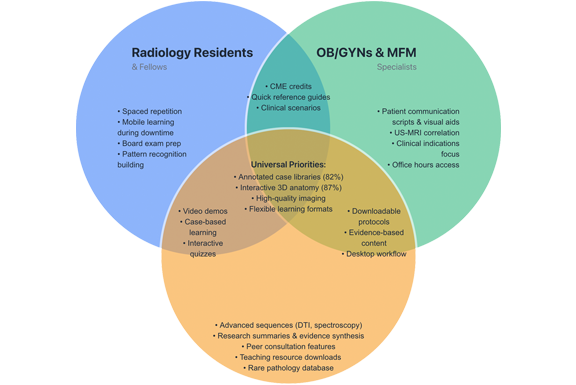
Venn Diagram | Universal Priorities: The Core MVP (Center)
The center intersection reveals the features that all three segments demand:
Annotated case libraries (82% preference) - Real MRI studies, expert annotations, findings highlighted, clinical outcomes
Interactive 3D anatomy models (87% preference) - Rotatable structures with gestational age progression sliders
High-quality imaging - Clear, diagnostic-quality images
Design Philosophy Learned
"Urgency Shapes Everything"
Users in crisis (failing exam, difficult patient case) will tolerate friction that makes others quit. Design onboarding elasticity: fast-track for urgent users, gentle guidance for explorers.
"CME Isn't a Feature, It's the Business Model"
For medical professionals, learning time must serve dual purpose: clinical improvement + career requirement. Integrate credentialing into every interaction.
"Expert-Created Content = Non-Negotiable Trust"
Medical users instantly assess credibility. One incorrect fact destroys platform trust. Solution: Expert contributor program with peer review (94 subspecialists contributing).
"Offline Isn't Optional for Global Users"
International fellows, rural practitioners, and commuters need reliable offline access. 81% downloaded content, 100% seamless offline completion.
Results
With the site completed, our Subject Matter Experts “SME” worked with us to create and post online BRAIN courseware, which was made available for DoD and civilian and officer trainees undergoing their clinical rotations at Children’s National Hospital.
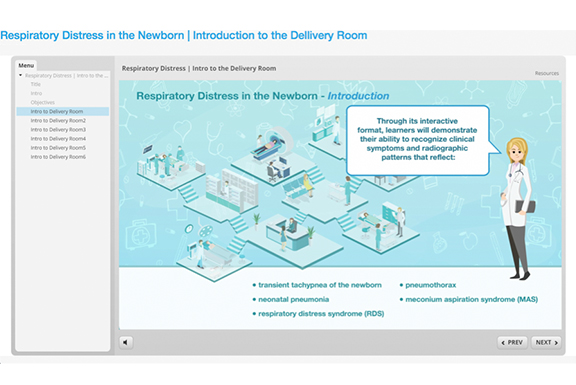
The focus of our training program was to successfully convert and develop the clinical teaching seminars into web-based formats and internal field test modules. To date, the survey data from the in-person lectures and online assessment scores demonstrate that both in-classroom and web-based approaches to teaching topics within the program has significant training benefits for healthcare providers across multiple specialties and subspecialties.